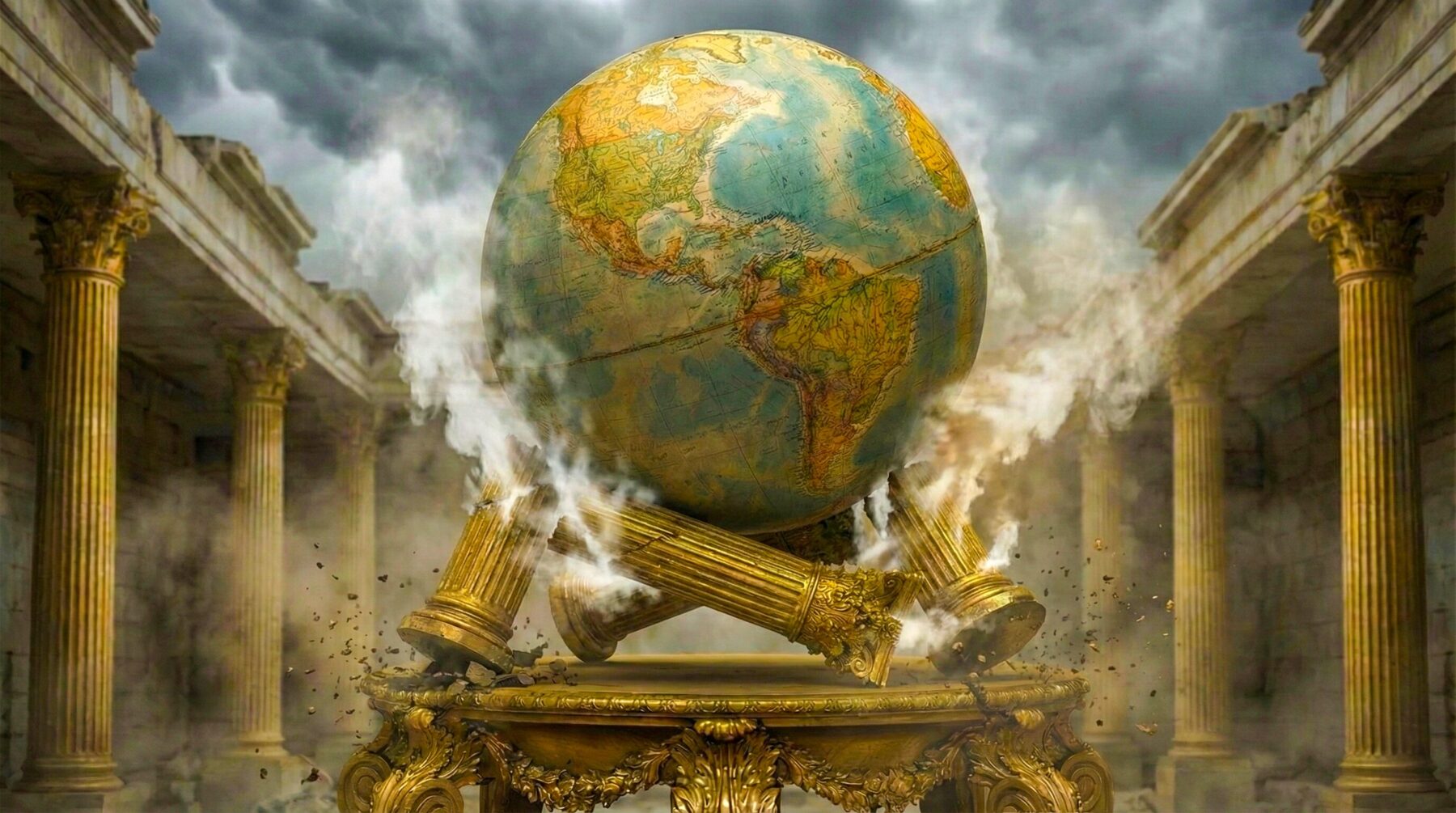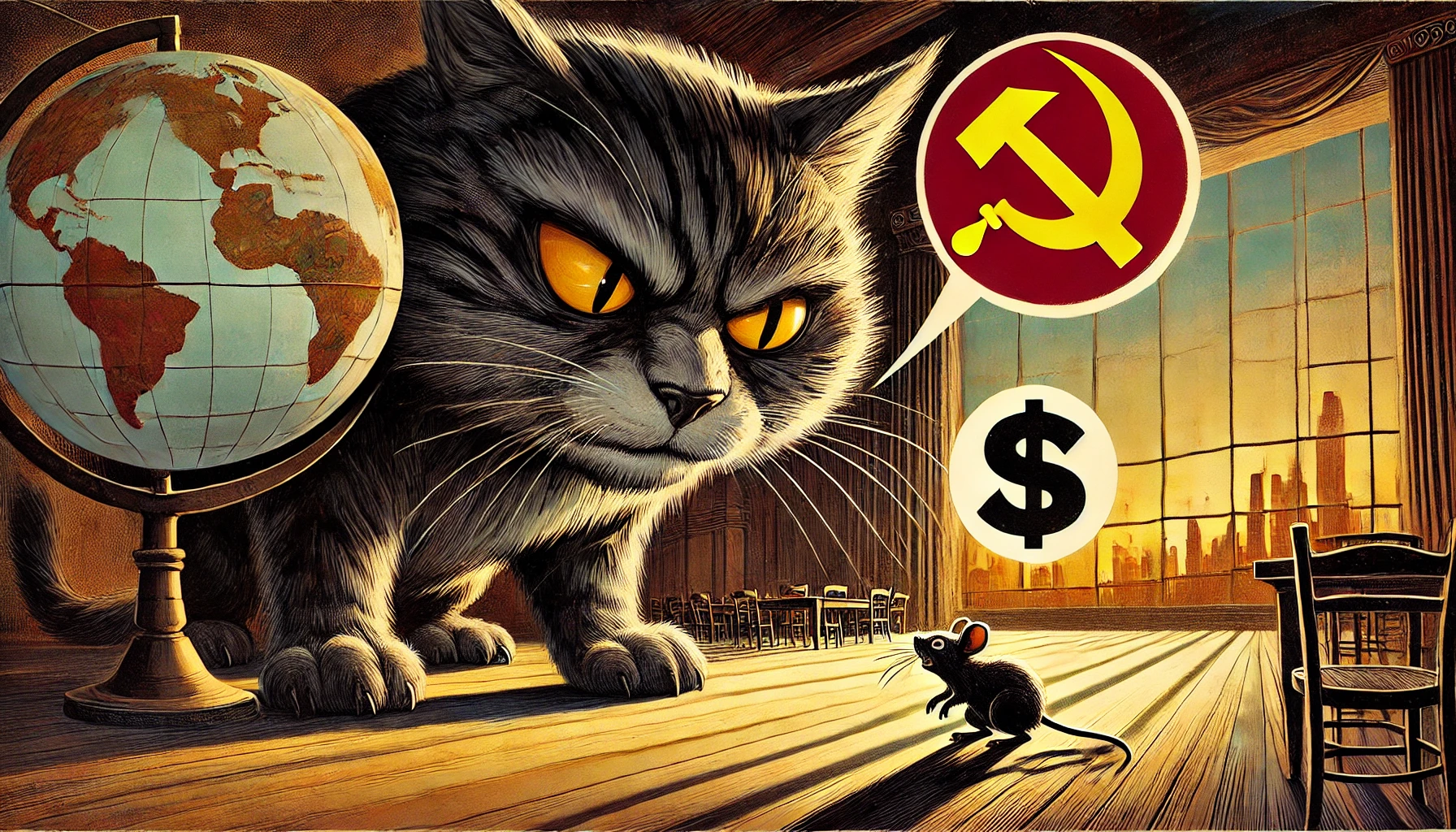

The Rise of Populism: Beware of Wolves in Sheep’s Clothing
Autocratic populism is the leading cause of democratic backsliding. Populist leaders pose as public champions to win elections while undermining liberal democratic institutions.
Why is global democracy failing and populism rising?
by Wayne Stelk, PhD December 2025

Note: This post is part of a series I am writing about A Playbook for Autocrats. In this playbook, populism is the key driver in the autocratic destruction of liberal democracies. The introduction to this series is available here.
In Brief:
Populism: An Empty Promise
- Populism isn’t a solid governing platform but a “thin ideology” that pits “the will of the people” against a “corrupt elite,” letting it be tied to either right-wing nationalism or left-wing economic demands.
- Autocratic populism is the leading cause of democratic backsliding because it enables authoritarian leaders to acquire legitimacy through elections while undermining liberal democratic institutions.
Why Democracy Is Declining
- About 71% of the world’s population (around 5.7 billion people) now live under authoritarian or semi-authoritarian regimes that use populist rhetoric and tactics, up from approximately 48% a decade ago.
- In 2025, 45 countries are experiencing autocratization, while only 19 are becoming more democratic, highlighting a clear global trend toward illiberal governance.
Why Populism is Rising
- Populist leaders capitalize on widespread discontent: economic anxiety (68% feel the economy favors the wealthy), a perceived gap between elites and ordinary citizens (64% say politicians don’t care about them), and opposition to immigration (44% believe their country would be stronger without it).
- The “Political Dynamics Triangle” model (environment, public, leader) demonstrates how shifts in conditions and information flow influence voter desperation and make strongman solutions more attractive.
The Populist Leader: A “Wolf in Sheep’s Clothing”
- Populist leaders portray themselves as defenders of the people who will “drain the swamp” of corrupt elites. However, once in office, they often betray their supporters by enriching themselves and their allies.
- Donald Trump’s U.S. presidency exemplifies this pattern: a leader who vowed to resolve everything swiftly but ended up undermining democratic norms and institutions.
The Wreckage of Populism
- Populist leaders promise quick solutions to complex problems. Tragically, their governments usually worsen economic performance and quality of life, not improve them.
- Authoritarian populism continually erodes liberal democratic institutions, transforming what voters saw as a correction into a lasting danger to democracy.
Populism’s Rising Global Dominance
A political movement called populism is spreading worldwide. It is leaving destroyed liberal democracies in its wake.
In many nations, democratic institutions are being weakened and hollowed out by far-right or extreme-right governments claiming to be “populist.”
Today, about 5.7 billion people—roughly 71% of the world’s population—live under authoritarian or semi-authoritarian regimes that use populist rhetoric and tactics. Ten years ago, that number was closer to 48%. The rise of populism shows no sign of slowing, as seen in the recent sharp shift toward autocracy in the United States.
The irony is that populist leaders, who pose existential threats to democracy, are being elected by citizens who believe these strongmen (and they are almost always men) will solve their nations’ problems.
Populist Trickery
In this post, you’ll learn that populist leaders are wolves in sheep’s clothing. They run for office on promises of quick fixes to difficult social issues. At their rallies, you might hear speeches that sound like this:
If you lie awake at night worrying about immigrants moving into your neighborhoods, your paychecks no longer cover the bills, schools promoting transgender identities, and books that school libraries teach suggest that race is more important than job skills, then vote for me to drain the swamp of the elites who are corrupting this country.
The wolf in populist clothing proclaims to be “a man of the people” who will represent “the will of the people” against the “evil forces of the elites” who are destroying the country.
The populist crusader who promises “I alone can fix it” is actually a wolf that will feed on you and your community in ways you could not have imagined.
This post recounts how and why many self-proclaimed populist “saviors” shed their sheep’s clothing once they come into power. The American presidency of Donald J. Trump serves as a case study in “wolf-in-sheep’s-clothing” politics.
As prominent as Trump is worldwide, he is just one of many political predators, several of whom helped craft the autocratic playbook he follows.
Why is populism misunderstood as a political platform? How has “populism’ become such a frequently used and abused word? Why are these false prophet leaders so compelling as political candidates, and how do they betray you by violating your trust and draining your resources?
But before asking why populism is rising, we must first ask: why is democracy failing?
Why is Democracy Failing?
Consider the alarming statistics: in 2025, 45 countries are undergoing autocratization, while only 19 are becoming more democratic. Why is this happening? Is each country a unique case, or is there a common factor that links these failures together?
To state the obvious, the 20th century and its political style are history. Authoritarian governments no longer come to power through military juntas.
Today, autocrats are elected through popular votes. The great irony of the 21st century is that most citizens who support autocratic populists also back liberal causes.
Ipsos recently conducted a survey for Earth4All and the Global Commons Alliance involving 22,000 participants aged 18 to 75 across 22 countries, including 18 G20 nations (excluding Russia) and four additional countries—Austria, Denmark, Kenya, and Sweden. The survey’s findings reveal a paradox.
First, the respondents in both conservative and liberal-leaning nations support popular liberal positions. Across all nations, they want their governments to:
- Impose higher taxes on wealthy individuals to fund economic and social reforms
- Increase taxes on high incomes and large corporations
- Reduce carbon emissions and address climate change (green initiatives)
- Reform political and economic systems
- Prioritize the well-being of people and nature over profits.
- Make available universal healthcare
- Improve workers’ rights
The paradox is that autocrats don’t favor these liberal positions. Then, why do autocrats keep getting elected?
The answer is that voters have low trust in their governments’ ability to address their most urgent issues. In the survey, respondents showed pessimism about the future of their country or the world. In other words:
Globally, people support liberal values, but they have lost faith in their liberal democratic governments to fulfill these ideals. As a result, they are turning to autocrats who pose as populist leaders to make their dreams a reality.
By now, you can probably expect the next question: Why are voters so naive to believe that an autocratic populist will become their champion of society, guiding them toward a brighter future?
Although there is no simple answer to this question, a model of political dynamics can help explain how desperation and despair influence voter choices in public office elections.
The Dynamics of Populist Politics
No one can be a leader without followers. In a work setting, you and your colleagues might have to accept an assigned boss, but unless that boss gains the staff’s support, they will be ineffective as a leader. Politics functions the same way—a complex mix of people, interests, and institutions that is difficult to break down into its basic parts. When confronted with this complexity, models help us identify and understand the essential components.
Models simplify complexity. Albert Einstein famously used “thought experiments” to create models of the universe and argued that a model should be “as simple as possible, but not simpler.” Political models aim to do the same for power, institutions, and citizens.
The Toxic Triangle
A useful model of politics divides the system into three parts: the environment (nature, social, and economic), voting citizens, and a government leader. When an elected leader places self-interest above the nation’s interests, this setup becomes what political scientists call a “toxic triangle.” This is a powerful model that I have discussed in a previous post.
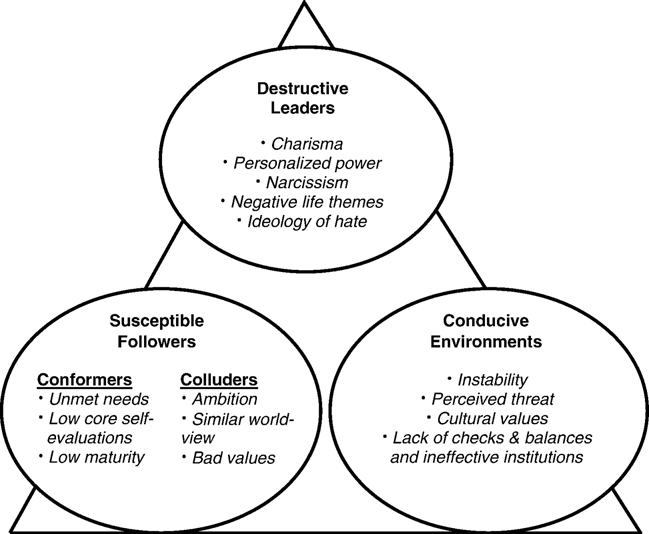
When Systems Thinking Is Applied To The Toxic Triangle
If we want to reverse-engineer the hot stew of politics, systems thinking offers a useful perspective. Systems thinking views human affairs as networks of interacting, living systems rather than isolated parts. A car is a mechanical system that can be taken apart and put back together when it breaks down. But politics isn’t mechanical—it’s a living system made up of living people. When you get sick, you cannot be disassembled and repaired like a car. Your body and mind represent a complexity that is far more than the sum of their parts.
A key difference between mechanical and living systems is the flow of information. Boulders placed next to each other do not communicate; they are stable and unchanging over time. Living systems, however, cannot exist without a continuous stream of information from their environment. A boulder is non-living and stationary. You are alive and dynamic.
The Political Dynamics Triangle
To capture the real-time dynamics of people interacting in a political space, I have expanded upon the static toxic triangle by adding the dimension of information flow over time. This dynamic model maintains the same three elements but emphasizes their ongoing interactions and feedback loops.
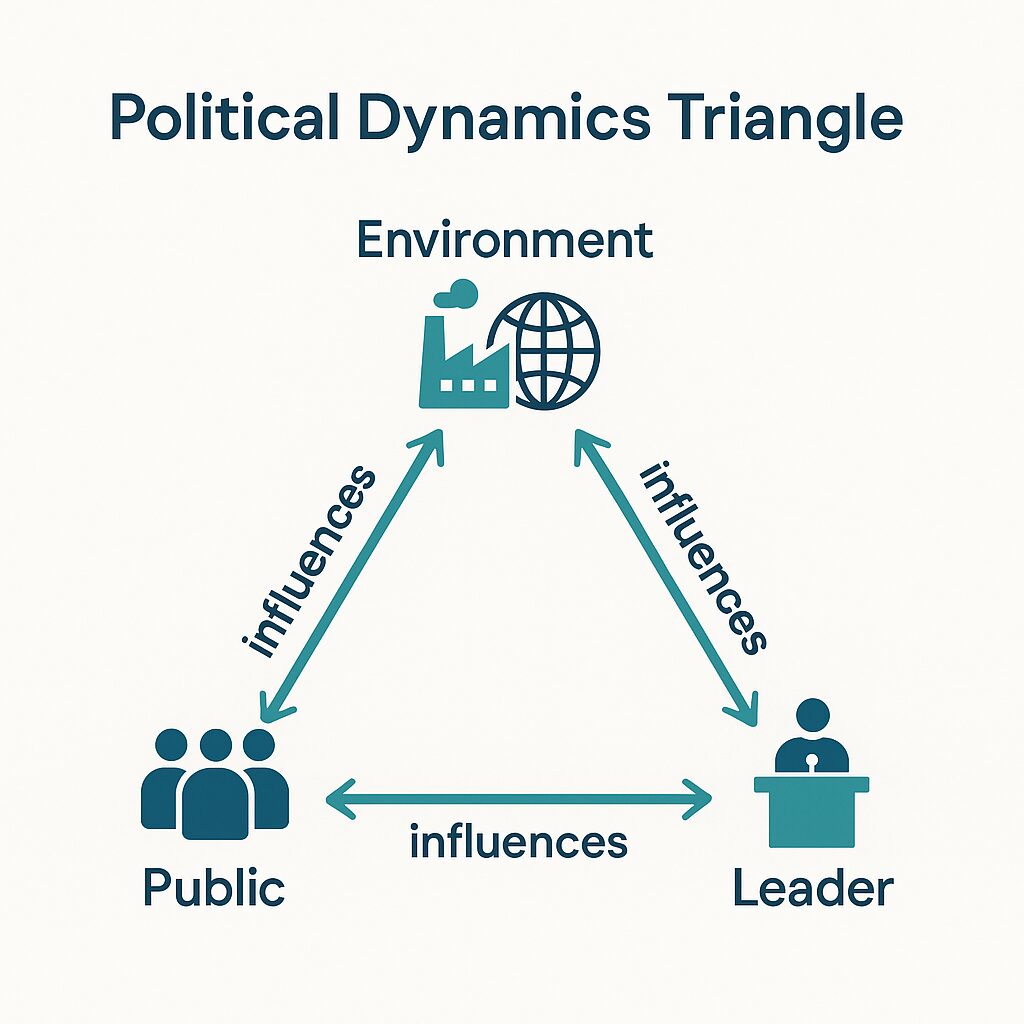
In this Political Dynamics Triangle, the environment is at the top, with the leader and the public at the two bottom points. Two-way arrows between all three represent ongoing mutual influence. The goal is to show the political process as a real-time “video stream,” highlighting continuous change rather than a static snapshot.
Information continuously flows in all directions between the environment, the public, and the leader. As the information flows, each node changes. Remember Heraclitus’s insight: “You cannot step into the same river twice because the river is never the same and you are never the same.” The same is true for political systems.
Placing the environment at the top does not mean it is more important than the public or the leader. Instead, it visually reminds us that leaders and citizens always operate within a constantly changing context of events, shocks, and constraints. Political analysis often underestimates how much environmental conditions influence human behavior.
Consider the environmental effect known as “priming.” Research has shown that when a proposal to increase school spending is on a ballot, voters who vote in a school building are more likely to support the measure than those who vote elsewhere.
Another contribution of the Political Dynamics Triangle is that the model is not limited to toxic or destructive leaders. The same three elements—environment, public, leader—are present in any governing system, whether a strong democracy with a broadly benevolent leader or an autocracy led by a self-serving strongman.
Whether a leader is toxic or beneficial, what matters is the flow of information between the three elements.
- How does the leader perceive the environment—as a threat to be managed for self-advantage, or an opportunity that can benefit citizens?
- How do they communicate with the public, how does the public respond, and how do institutions mediate or amplify those interactions?
The model encourages examining these flows instead of focusing solely on toxic dysfunction.
Why Is Populism Rising?
Our model of political dynamics shows that any type of government is shaped by the interactive influences of the environment (social, economic, and natural), the public, and government leadership. Under changing conditions, any one factor can have an outsized influence on the others.
In today’s world, it seems that both the environment and the public influence the selection of government leaders. A recent international survey by Ipsos has documented widespread public dissatisfaction with governments and concerns about environmental issues such as immigration control.
The Ipsos Populism Report 2025 reveals that large portions of voting-age adults across 31 countries share these beliefs:
- “the system is broken,”
- the economy is rigged, and
- the remedy is a “strong leader willing to break the rules.”
The findings from this study were presented across several areas. Here is a sample of survey findings:
Economic Discontent
- Economic anxiety persists despite inflation decreasing from record highs.
- Many feel left behind, with 68% believing the economy favors the wealthy.
- Economic discontent is particularly pronounced in emerging economies.
Gap Between Elites and Citizens
- 64% agree that traditional politicians do not care about ordinary citizens.
- 62% believe experts do not understand the lives of everyday people.
- The gap between ordinary citizens and the political/economic elite is a widespread feeling across different generations and social classes.
Opposition to Immigration
- 44% believe their country would be stronger without immigration, with strong backing in emerging economies.
- In Europe, anti-immigration views are less influenced by unemployment rates, showing a decline in fear of job competition from immigrants.
Voter Preference: Right-Wing vs. Left-Wing Populism
An important feature of populism is that it has no platform for building a government. This is why there is so much disagreement about the meaning of populism – is it a government style or a movement?
Political scientists describe populism as having a “thin ideology.” As mentioned, the “simple” ideology of populism involves choosing a “strong leader” who will confront the “elites” and sabotage the “will of the people.”
Populism does not specify the leader’s values. It does not define the “elites,” but generally refers to the “prevailing establishment.” And in a diverse nation, can there be a singular “will of the people”? As such, the populist platform can be shaped toward any ideology—conservative (right) or liberal (left).
In this Ipsos survey of 31 nations, sampling 23,228 adults aged 16-74, there were clear differences in what respondents expect from a government that addresses their many concerns. These leader preferences fall into two categories: right-wing and left-wing.
Expectations for Right-Wing Populism:
- More likely to emphasize anti-immigration views, often blaming immigration for economic struggles.
- Supporters are more likely to feel alienated from traditional politics and favor direct authoritarian leaders.
- Hostility toward immigration is a key issue, with a significant majority supporting prioritizing jobs for citizens over immigrants during economic hardship.
Expectations for Left-Wing Populism:
- Focuses on economic inequality and the belief that the economic system is rigged in favor of the wealthy and powerful.
- Supporters are less likely to reject traditional institutions compared to right-wing populists.
- They are less likely to hold anti-immigration views and are more aligned with the general population on these issues.
In today’s polarized political climate, the rise of populism usually favors the conservative right, though geography still plays a role.
In Europe and North America, the most electorally successful populists tend to be right-leaning or national-conservative, focusing on cultural identity, secure borders, and skepticism toward global institutions. Examples often cited include leaders like Donald Trump in the United States, Viktor Orbán in Hungary, Narendra Modi in India, and Jair Bolsonaro in Brazil, all of whom combine anti-elite rhetoric with conservative or nationalist policy agendas.
Left‑wing or “social” populism is evident in parts of Latin America. Some Southern European movements demonstrate stronger left‑wing or “social” populist trends.
Across Asia, populism typically takes a nationalist, conservative form, emphasizing cultural identity, sovereignty, and security over traditional left-wing redistribution. Many leaders portray themselves as strongmen who streamline bureaucracy and tackle crime, drugs, or perceived external threats, which appeals to voters frustrated by inequality, weak government services, or longstanding corruption.
Based on the Ipsos survey, left-populist voters are especially likely to see the economic system as rigged in favor of the wealthy, while right-populist voters are more focused on cultural threats and national sovereignty.
Right-Wing or Left-Wing: Does Populism Work?
When faced with voter discontent with the current government, challenging candidates will catalog voter grievances and promise to fix them all—usually within days of being elected.
When voters seek relief from an incompetent or corrupt government, do populist candidates follow through on their promises once elected?
In a word: no. Their promises are empty and their strategies are lacking. Under authoritarian populists, a nation’s economic performance and quality of public life typically go from bad to worse. And liberal democratic institutions are destroyed.
In a companion article to this post, I will document the extensive negative effects of populist governments by citing instances of their harm to people and public institutions.